A practical guide to linen bedding
Libeco Blankets: A Guide to Texture, Weight, and Layering
A blanket announces itself first by touch, then by what it does on a cool evening. With linen, those impressions are shaped by more than the name of the fiber: weave, weight, finish, and the layers beneath it all matter. Here is how to assess a Libeco blanket, and how to make it useful through the changing moods of a year.
A bed is a small climate, with its own weather systems: a warm afternoon trapped under a duvet, a draft that arrives at the ankles, the sudden discovery at three in the morning that one person is a furnace and the other has become an archaeologist of blankets. Choosing a layer is therefore less a matter of finding the warmest thing than of understanding how it behaves. Does it settle close to the body, or float above it? Does it feel crisp, nubby, smooth, or softly rumpled? Can it be folded back without making a bulky ridge at the foot of the bed?
These are useful questions when considering Libeco blankets, or any linen blanket. Linen is made from flax, but “linen” alone does not tell you whether a particular textile will feel light or substantial, supple or firm. The yarn, weave, density, finishing, and construction each contribute to the result. A thoughtful choice begins with the blanket’s intended job: a light cover for a nap, a top layer over sheets, an extra source of warmth, or a flexible piece that moves from bed to sofa as the evening changes.
Start with the job, not the label
The word blanket can describe textiles with quite different roles. Some are designed as decorative bed covers; others are meant to add noticeable warmth. A coverlet may be relatively light and tailored to lie neatly over a bed, while a throw is often sized for a chair or sofa. A heavier woven blanket may work as a substantial layer in its own right. Names are helpful, but they are not standardized guarantees of warmth or weight.
Before comparing details, picture an ordinary day in the room. Is the blanket intended to replace a duvet during mild weather, or to supplement it in winter? Will it be pulled up each night, or folded across the foot of the bed and used occasionally? Is it likely to travel to the living room? Those answers establish a practical range. A light layer that is easy to move may be more useful than a heavy one that is admired but rarely touched.
Also consider who will use it. A person who sleeps warm may welcome a breathable, relatively light top layer; someone who gets cold may prefer a more substantial blanket combined with sheets and a duvet. Shared beds make the matter more interesting. In that case, separate blankets or a flexible arrangement can be more comfortable than asking one textile to satisfy two opposing internal forecasts.
Texture is a construction story
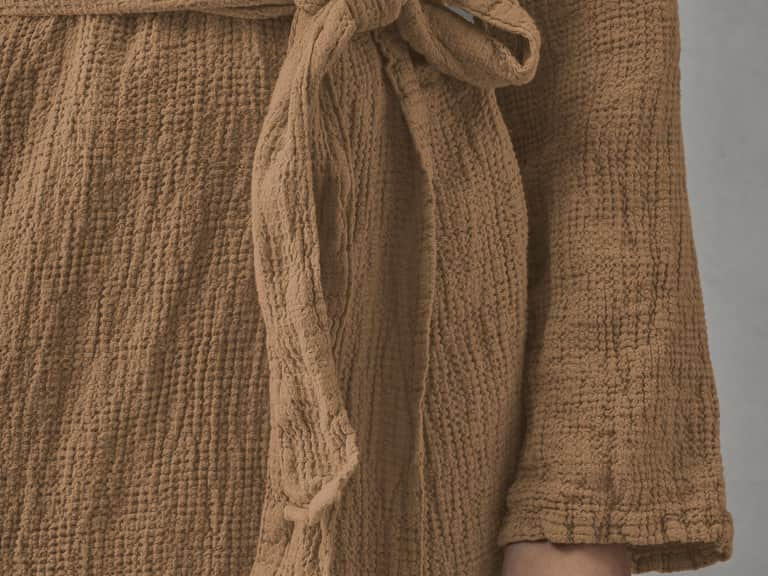
Linen’s familiar character is often described as relaxed, textured, or naturally irregular. Those words refer to sensations and appearance, not a single prescribed finish. Flax yarn can show small variations along its length; in a woven cloth, those variations may give the surface a lively, slightly uneven quality. The weave determines how clearly that character appears and how the fabric moves. A close, firm construction can feel crisp and structured. A looser weave may feel more open and drape more freely.
Finishing changes the first impression, too. Washing or garment-washing can soften a textile and reduce the sense of stiffness associated with new fabric. A washed surface may look gently rumpled from the beginning rather than pressed into a smooth, formal plane. Other finishing choices can preserve a cleaner, more defined appearance. Neither is automatically better: the right one depends on whether the room calls for polish, ease, or a little of each.
When assessing a Libeco blanket, look for specific descriptions of the weave and finish rather than relying on broad adjectives. If you can handle it, notice whether the surface feels even or visibly textured, whether the edges have a firm border, and whether the cloth folds willingly or holds its shape. Online, product specifications and close descriptions of construction can help, though they cannot fully reproduce touch. Terms such as “soft” and “substantial” are subjective; details about fiber content, dimensions, and fabric weight are more useful for comparison.
Texture also changes with use. Linen commonly relaxes and softens through laundering, although the rate and extent depend on the fabric and its care. That does not mean every linen blanket will become plush, or that a crisp textile is defective. It means the first encounter is one chapter in the fabric’s life, not necessarily the final verdict.
How to read blanket weight
Fabric weight is often listed in grams per square metre, abbreviated g/m² or GSM. It describes the mass of a given area of fabric. A higher number generally indicates more material per square metre, but it does not, by itself, translate neatly into a particular level of warmth. Fiber, weave, air trapped within the construction, finishing, and the blanket’s size all affect how it feels in use.
This distinction matters because weight is easy to mistake for a complete comfort rating. Two textiles with similar GSM can have different drape and warmth if one is more open and the other more compact. A thick blanket may feel reassuringly present but could be less convenient to fold or layer. A lighter blanket may be easy to handle and still provide a useful degree of coverage, particularly when paired with other bedding.
If a listing gives weight in ounces per square yard instead, use it as another measurement of fabric mass, not as a direct warmth promise. Compare products using the same units where possible, and check whether the stated figure applies to the textile itself or to a finished item. Dimensions are important, too: a large blanket contains more total fabric and may feel heavier to lift even when its fabric weight per area is modest.
The sensible question is not “What is the heaviest blanket?” but “What weight will work in this room, with these layers, for this person?” A bedroom kept warm through winter may call for a lighter blanket than a chilly guest room. A layer intended for a sofa may benefit from easy handling more than maximum coverage. Weight should be read in context, alongside weave, size, and the way the blanket will be used.
The value of linen in a layered bed
Linen’s appeal is partly tactile and partly practical. It is a natural flax fiber, and woven linen is often appreciated for its breathable, moisture-managing feel. The experience varies with the particular cloth and the conditions in the room; no fiber can promise that every sleeper will stay cool or comfortable. Still, linen can make a useful layer for people who prefer bedding that does not feel uniformly plush or heavy.
A blanket also creates a boundary between layers. It can add coverage without requiring a full change of duvet, and it can be folded down when the room warms. In this respect, flexibility is a form of comfort. Rather than expecting one bedding item to regulate every night, a well-planned bed lets sleepers add or remove layers with little ceremony.
The particular virtues of a Libeco blanket should be judged from its stated fiber content, construction, finish, dimensions, and care instructions. Brand familiarity can be a starting point, but it cannot substitute for the specifications of the individual item. If a listing does not state a detail that matters to you, such as fabric weight or washing method, treat that as an unanswered question rather than filling in the blank from assumptions about linen generally.
Layering for changing seasons
The simplest arrangement starts with a fitted sheet, followed by a top sheet if you use one, then a duvet or other main covering. A blanket can sit above that arrangement as an adaptable extra layer. In mild weather, it may be enough on its own; on a colder night, it can add coverage over the duvet. During the day, it can be folded across the lower part of the bed, where it is easy to reach without having to remake the entire bed around it.
The order can be adjusted to suit the feel you prefer. A blanket directly over a top sheet gives it a more immediate presence against the body. Placed over a duvet, it serves as an additional layer and a visible finishing surface. If the blanket is textured, placing it where it can be seen may bring variation to otherwise smooth bedding. If it is especially substantial, folding it at the foot of the bed can keep the upper layers from feeling crowded.
Think in terms of contrasts. A more open, rumpled linen surface can sit comfortably with smoother sheets; a clean-edged blanket can introduce structure to a loosely made bed. A blanket in a quiet neutral shade can tie together bedding of different colors, while a stronger color can provide a focal point without requiring the room to be redesigned. These are not rules so much as ways to make the textile earn its place.
Seasonal use need not follow a calendar. In spring and autumn, room temperature can change more sharply than the month suggests. Keep the blanket folded within easy reach rather than putting it away at the first warm spell. In summer, a light layer may remain useful in air-conditioned rooms; in winter, it can supplement other bedding. Its value lies in being available when conditions shift.
A few practical checks before choosing
- Check the dimensions. A blanket should cover the area you intend it to cover, with enough overhang for the bed or seating it will serve. Do not assume that product labels such as “queen” or “king” mean identical measurements across makers.
- Look for fiber content. Confirm whether the blanket is linen throughout or includes other fibers. Blends may have different drape, feel, and care requirements.
- Read the construction details. Weave and finishing help explain why two linen textiles can feel unlike one another.
- Use weight as one clue. GSM is helpful for comparison, but it is not a complete measure of warmth or softness.
- Plan for handling. Consider whether you can comfortably fold, lift, and launder the blanket according to its care label.
- Match the textile to the room. A guest bed, a warm bedroom, and a frequently used sofa each have different demands.
When possible, handle a sample or examine the item in person. Let it rest over your hand. Notice its weight, its edge, and whether it drapes in a way you find inviting. The small physical facts are often more informative than a string of superlatives.
Caring for linen without overthinking it
Care should begin with the maker’s instructions. Linen items can differ in weave, dye, finish, and construction, so a general rule is not a replacement for the specific care label. If machine washing is permitted, avoid overcrowding the machine; textiles need room to move through water and rinse properly. Use a detergent suitable for the fabric, and take care with bleach or aggressive stain treatments, which may affect color or fiber.
Drying also influences feel. Air-drying can reduce exposure to heat and help a blanket retain its shape, provided it is supported evenly and not left in harsh conditions for too long. If the care instructions allow a tumble dryer, a moderate setting and prompt removal can help limit excessive drying and deep creases. A blanket that is slightly damp may be easier to smooth or fold than one that has become crisp from prolonged heat.
Linen’s relaxed appearance is part of its character; ironing is a preference, not a requirement for every setting. If you prefer a neater finish, follow the care guidance and use appropriate heat. Between washes, airing and careful storage can be enough. Keep the blanket clean and fully dry before storing it, and avoid compressing it for long periods when a loose fold is possible. Such small habits protect the fabric without turning ordinary bedding into a laboratory project.
Texture and time
A new blanket can seem almost too composed: its folds are sharp, its surface untested, its place in the room not yet decided. With use, it becomes part of the household’s ordinary geography. It is pulled toward the chilly side of the bed, carried to the sofa, folded with varying degrees of ambition. Linen’s surface may soften over time, but the more consequential change is often familiarity: the discovery that this particular layer is just right for reading, or for the hour before sleep when the duvet feels excessive.
That is why a linen blanket guide cannot reduce the choice to a fiber name or a number on a product page. A considered decision joins measurable details—weight, dimensions, construction—to the less measurable question of how a textile feels in a real room. For Libeco blankets, as for linen blankets generally, texture determines the first impression, weight helps clarify the role, and layering makes the blanket useful beyond a single season. The best choice is the one whose qualities make sense together, and whose place on the bed does not require a special occasion.
In brief
To assess a Libeco blanket, look beyond the word “linen.” Consider the specific weave and finish, compare fabric weight in consistent units, and check the dimensions and care instructions. Then decide how the blanket will work with sheets, a duvet, or other layers in the room. Texture is what you notice first; practical use is what tells you whether the choice was right.
A blanket need not be the warmest object in the house to be indispensable. It needs only to be the one you reach for when the room changes its mind.